
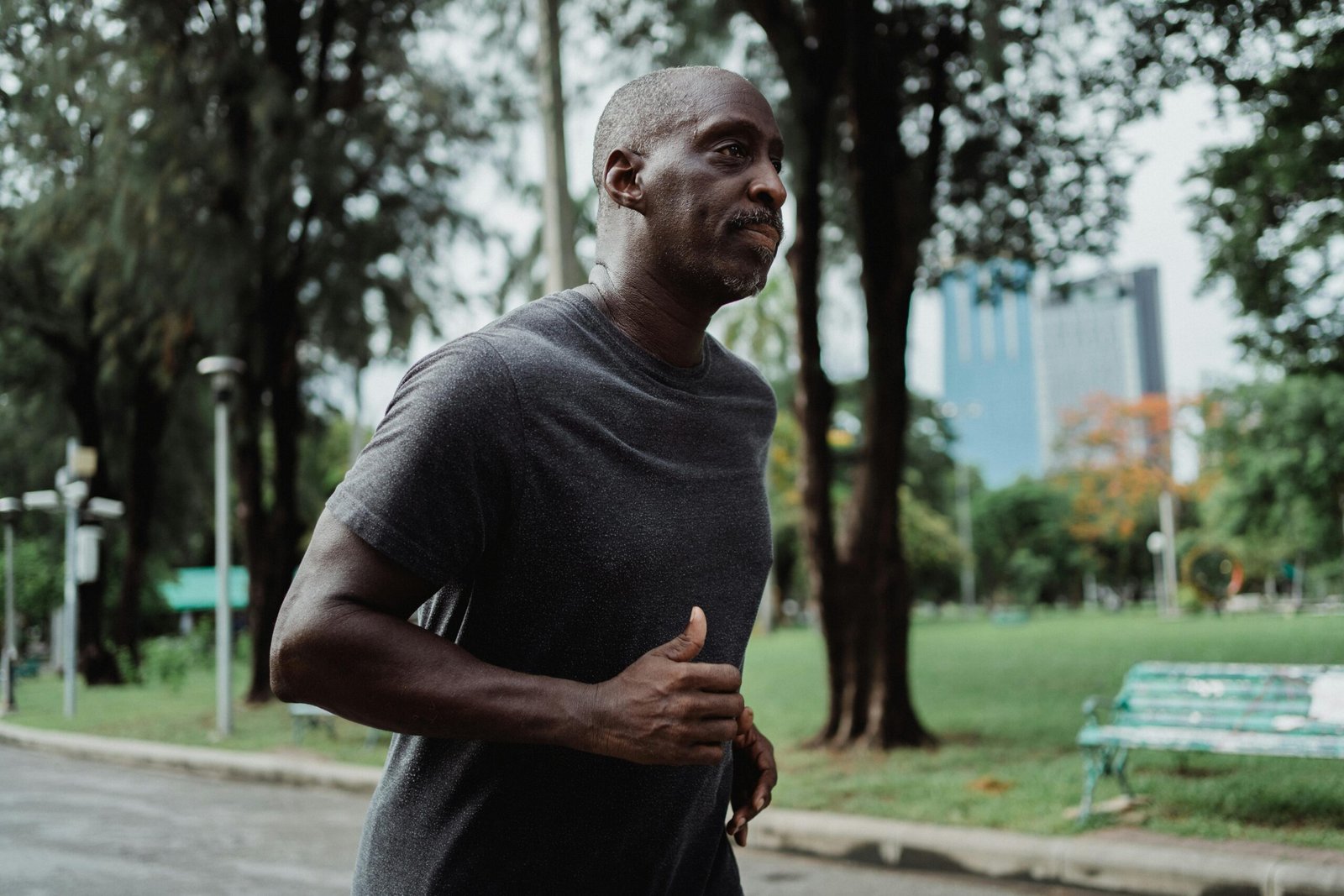
When I first started running, I was quietly convinced that everyone was watching me. Not in a supportive “go you!” way — more in a “look at that slow bloke puffing along like he’s being chased by bees” kind of way.
Every time I went out, especially in daylight, I’d feel this weird sense of pressure. What if someone saw my watch after and realised I was running 11-minute miles? What if Strava publicly declared me “last again” on some random segment? What if other runners judged me for walking halfway through?
Turns out, no one cares.
No one.
And once I truly accepted that, running got about 100% more enjoyable.
The Slow Start
Like a lot of people who take up running in their 40s, I didn’t exactly come out of the gate flying. I didn’t run at school, I never joined a club, and for most of my adult life, the only pace I ever cared about was “is the takeaway still open?”
When I started running to lose weight and feel a bit more human, I just… shuffled. I couldn’t go far, and I certainly couldn’t go fast. But I kept at it. The distances crept up. The weight started coming off. I began to feel better.
Still slow, though. And that bugged me — for no good reason.
Strava and the Tyranny of the Leaderboard
Don’t get me wrong, I love Strava. It’s handy for tracking runs, seeing progress, and pretending I’m doing something technical when really I just want a digital gold star.
But that leaderboard? The one that ranks everyone who’s ever run a stretch of pavement outside my house?
That thing is nonsense.
I once logged a solid 6K that felt great — strong pacing, no walking, even tackled a hill. I was buzzing. Then I checked Strava and saw I was ranked 213th out of 219 on some local segment.
Cue the internal voice: “You’re still rubbish.”
Except I’m not. And neither are you. I was just comparing my beginning to someone else’s middle — or in some cases, to a 22-year-old track athlete who apparently does recovery runs at my sprint pace.
The Truth: No One’s Looking
Here’s the big revelation — no one cares how fast you are.
Not the dog walkers you pass.
Not the cyclist who overtook you at twice your speed.
Not the stranger who gave you a nod from across the road.
Not even the runners zooming past you.
Because they’re all thinking about their own run, their own stats, their own playlist, their own sore hip or dodgy knee.
And if anyone does have time to judge you for not being Olympic material? That says more about them than it ever will about you.


Pace Is Not a Personality
For a while, I let pace define how “valid” I felt as a runner. Sub-10-minute miles meant I was Doing It Properly. Anything slower and I’d assume I was slipping backwards.
But that’s ridiculous. Running isn’t school P.E. There’s no pass or fail. You don’t become “less of a runner” if you jog at 12-minute miles. Or if you walk a bit. Or if your watch says you were in Zone 1 for 80% of the time.
If you’re out there moving your body — especially as a busy, tired, grown adult — you’re a runner. End of.
What I Focus on Instead
These days, pace is background noise. Nice to track, but not the focus. What matters more?
- How I feel during and after the run
- How consistent I’ve been over the week
- Whether my legs, knees and ego survived intact
- If I had a moment where it all just clicked — music on, legs moving, mind clear
Those are the runs I remember. Not the ones where I managed a minute faster per mile but hated every second.
The Joy of Running Slow (on Purpose)
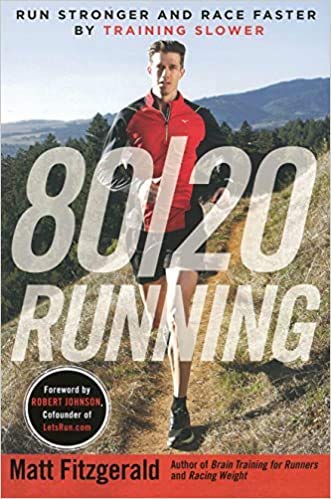
Here’s a fun fact: running slow on purpose — often called easy running or Zone 2 training — is one of the best ways to build endurance, improve aerobic fitness, and avoid injury.
In other words: slow is smart.
But it’s hard at first. Your ego wants to push. Your brain says “you’ve got more in the tank.” And sometimes you do. But the long game is all about consistency, not heroics.
Since I’ve embraced slower running — properly slow, not just “a bit below race pace” — I’ve:
- Increased my weekly mileage
- Stayed injury-free
- Enjoyed my runs more
- Recovered faster
So now, when my watch buzzes to tell me my pace is embarrassingly gentle, I just smile and keep going.
My Advice? Run Your Own Race. Literally.
Comparison is exhausting. It steals the joy from running — and we’re not doing this for money or medals, are we?
We’re doing it to feel good. To clear our heads. To get stronger. To age better. To maybe live long enough to see our kids roll their eyes at our Strava posts.
So if your run is slower than someone else’s? Doesn’t matter.
If you take walk breaks? Still a runner.
If you’ve never signed up for a race, or you finished one dead last? Still counts.
You’re not slow — you’re just not chasing the same thing as the next person. And that’s a good thing.
Final Thoughts (And a Shout-Out to My Watch)
My Garmin still tells me I’m “unproductive” some weeks. I ignore it. It once told me I needed 72 hours’ recovery after a jog. Cheers, mate.
Technology’s great, but it doesn’t know your knees. Or your job. Or your life.
So here’s to the runners who go at their own pace, literally and figuratively. The ones who show up, move their bodies, and couldn’t care less if someone passes them on the pavement.
No one cares how fast you are.
And once you realise that?
It’s honestly brilliant.