
As a new runner, I never thought I’d be interested in the tech, but finding the entry-level Gamrin changed that, and now I’m obsessed!
Midlife Mile
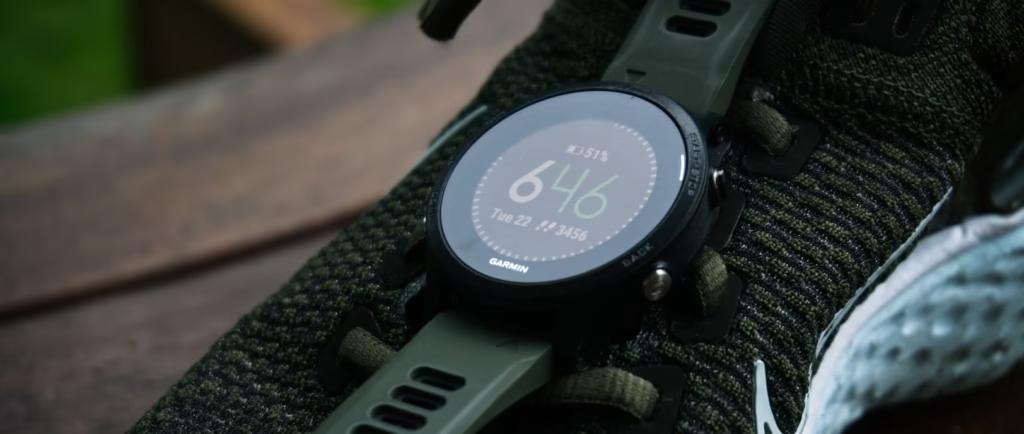
When I started running, I didn’t think I needed anything fancy. I was 44, unfit, and just trying to move a bit more. My phone did the job. Sort of. It tracked my runs (roughly), told me how far I’d gone (arguably), and gave me a deeply unhelpful map that usually included at least one section where I’d apparently walked through someone’s garden fence.
After a few weeks, though, I wanted more than “you ran for a bit, well done.” I wanted to know if I was getting better, whether my pace was improving, whether I was actually covering more distance or just tricking myself into thinking I was.
That’s when I started looking at running watches. And by “looking,” I mean spending far too long reading reviews written by people who run 100K races and live off gels and beetroot. Most of them were talking about watches with more features than my car.
Eventually, I found the Garmin Forerunner 55 — and it felt like the first one made for people like me: runners who are trying to take it seriously, but still have knees that make weird noises when they get out of bed.
What made me go for it
It came down to a few things:
- I wanted something accurate. My phone’s GPS had become more of a guessing game than a tracker.
- I didn’t want a smartwatch that pinged messages or tracked my stress levels. I’ve already got enough going on.
- I wanted something that wouldn’t confuse me or require an engineering degree to set up.
The Forerunner 55 looked simple but solid. It focused on running, not fluff. And it wasn’t stupidly expensive.
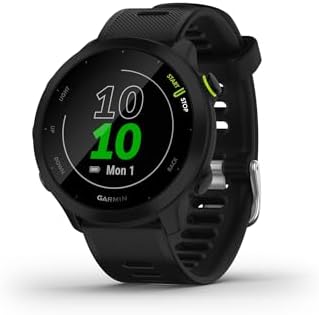
- Easy-to-use GPS running smartwatch monitors heart rate at the wrist and uses GPS to track how far, how fast and where yo…
- With the simple press of a button, a user can start their run or walk and track their time, distance, speed and more
- All-day activity tracking counts steps, calories, sleep and more
What it actually does — and what I use it for
There are loads of features on this thing, but I mostly use the basics:
- Accurate GPS that doesn’t cut out mid-run
- Live pace and distance on my wrist (so I can see I’ve gone out too fast, again)
- Heart rate tracking — mostly just for interest, not performance
- Training suggestions — it sometimes pops up with things like “easy run today” or “try intervals,” which I mostly ignore, but it’s nice to know Garmin cares
I also use the recovery timer, which tells you how long to rest after a run. Sometimes I think it overestimates me — “You’ll need 43 hours to recover.” From that run? I barely broke a sweat, mate. But still, it’s a good reminder not to just hammer myself for three days straight.
Garmin Connect: unexpectedly motivating
This was the bit I didn’t think I’d care about — the companion app. But Garmin Connect actually became a huge part of why I stuck with running.
It logs every run, gives you graphs, little achievements, streaks, comparisons to your previous efforts… and something about seeing it all build up over time just made the habit stick. I liked opening the app after a run and thinking, “That one was faster than last week,” or “I didn’t stop at that hill today.”
I didn’t expect to find stats motivating, but seeing the progress written down — even tiny ones — gave me a sense of momentum. And when you’re building fitness from scratch in your forties, momentum is everything.
Other things I’ve liked
- It’s light and doesn’t feel bulky on the wrist
- The battery lasts for ages — I charge it once a week, maybe less
- It doesn’t look too “serious” or flashy. Just a normal, solid watch
- I can run without carrying my phone, which I now love
I also don’t spend ages fiddling with it. Once it’s set up, it just works. Press one button to start a run, another to stop. Done.
A few quirks worth knowing
- It’s not touchscreen — you use buttons. I actually prefer this, especially when sweaty
- The Garmin interface isn’t the most intuitive the first time you use it, but it’s fine once you get used to it
- It doesn’t have contactless payments or music — which I didn’t want anyway, but some people care about that
Would I recommend it?
Yes — especially if you’re in that midlife zone where you’re not a beginner, but also not heading to a trail ultra next weekend. It’s straightforward, reliable, and actually helps you improve without being over the top.
The Forerunner 55 made running feel a bit more real for me. Not in a pressure way — but in a “this is something I do now” kind of way. And that shift in mindset, honestly, was bigger than I expected.
So if you’re hovering, unsure whether a watch will make a difference, I’ll say this: if your brain works anything like mine, the answer’s probably yes.
It won’t run the miles for you, but it might be the thing that keeps you showing up.
- Easy-to-use GPS running smartwatch monitors heart rate at the wrist and uses GPS to track how far, how fast and where yo…
- With the simple press of a button, a user can start their run or walk and track their time, distance, speed and more
- All-day activity tracking counts steps, calories, sleep and more