
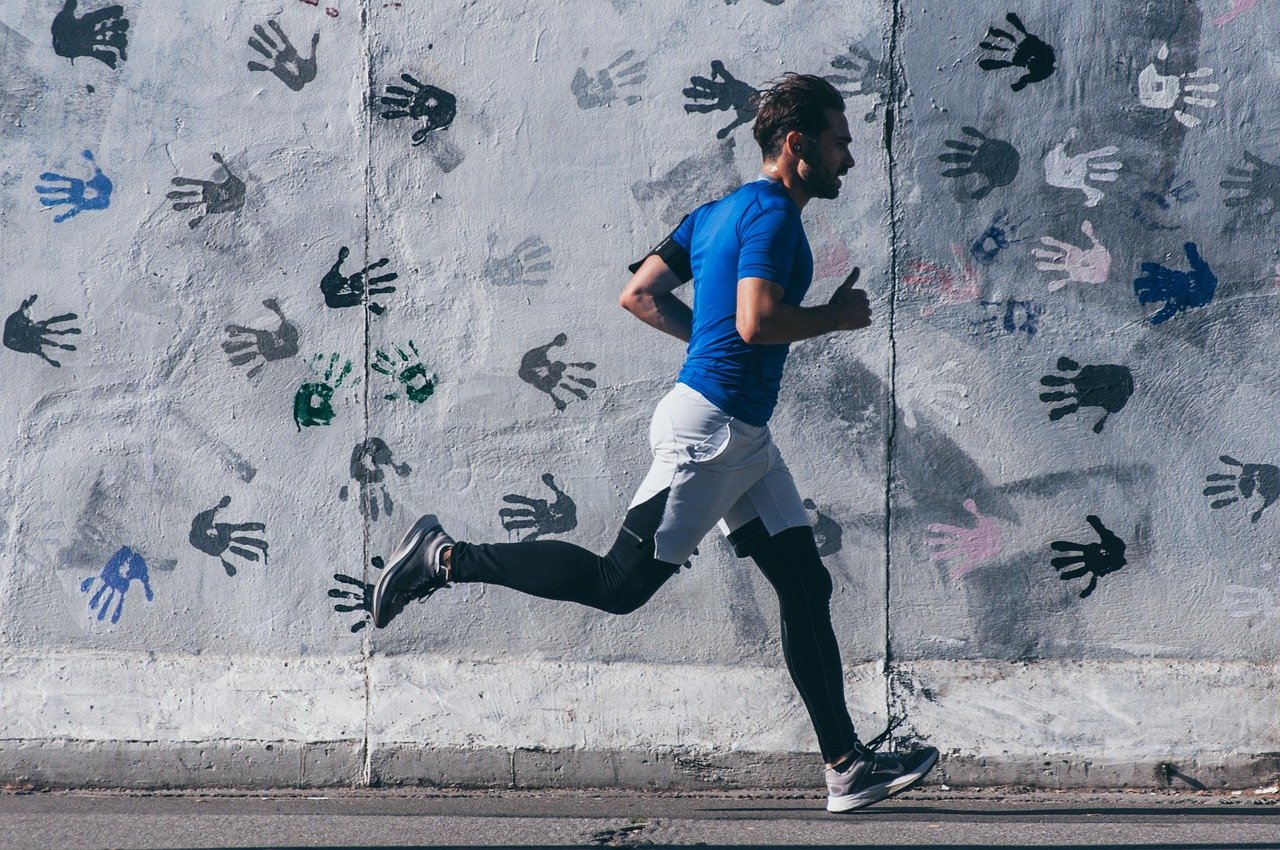
Things were going well. Too well, probably.
I was ticking off the long runs, building mileage slowly, eating a bit better, and even making peace with my foam roller. Training for my first half marathon in my 40s had been full of learning curves, but for once, it felt like I was getting somewhere.
Then came the niggle.
You know the one — starts off small, just a twinge here or there. You convince yourself it’s fine. You run through it, because that’s what runners do. Then one day, halfway through what’s meant to be your confidence-boosting 10-miler, it says: “Absolutely not, mate.”
And just like that, you’re hobbling back to your car wondering whether you’ve just blown the whole thing.
The Timing Couldn’t Be Worse
I was weeks away from race day. Close enough to feel like it was in reach, far enough that it still required a bit of hard work. And suddenly, I was facing the one thing every runner dreads: enforced rest.
The annoying part? I wasn’t being reckless. I hadn’t sprinted up a hill like a maniac or tried a new strength workout that broke me. I’d been careful. I’d followed the plan, respected rest days, even started stretching occasionally like a responsible adult.
But bodies are weird. Especially midlife bodies. You can do most things right and still get tripped up by a dodgy tendon or a muscle that’s had enough.
Enter: The Ice Bath Experiment
I’m not one for gimmicks. I don’t own a massage gun. I don’t have a cupboard full of turmeric powder or collagen sachets. But in my increasingly desperate search for recovery help, I kept seeing runners bang on about ice baths.
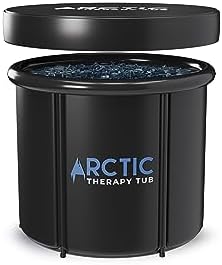
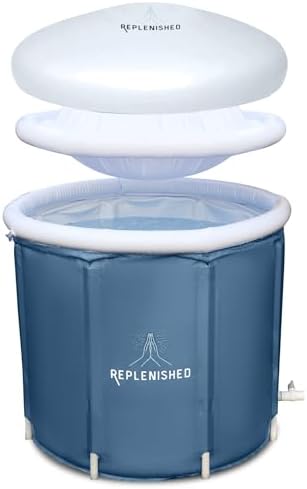
So I gave in. Not to some fancy cold plunge tub that looks like a whiskey barrel — I went for the cheapest option I could find on Amazon: £27.99, folds up like a paddling pool, feels like a bin liner full of regret.
And yes, it works. In that it holds water. Very cold water.
The first time I climbed into it (and “climbed” is generous — it was more of a slow, fearful squat), I made a noise I’ve only previously made during calf cramps. It’s a special kind of awful. Your entire body screams “get out” while your brain goes “no, we paid money for this, stay in”.
But once I stopped breathing like I was giving birth, I actually settled into it. Not comfortably, obviously. But enough to get through 10 minutes without calling it off. And afterwards? I did feel a bit better. Less swollen. Less achey. Maybe even slightly smug.
Does It Work? Honestly… Maybe
I’ll be straight with you: I don’t know if the ice bath made a massive difference physically. There are studies arguing both sides — some say it helps reduce inflammation and speed up recovery, others say it might actually slow down adaptation.
But what it did do was make me feel like I was doing something proactive. And when you’re in that horrible limbo of waiting to see if your leg is going to behave, that feeling is gold.
Plus, there’s something strangely satisfying about finishing a freezing cold bath and realising you didn’t cry. It makes your usual post-run shower feel like a luxury spa. Silver linings.
Injury Brain Is Real
What they don’t tell you about injuries is how much they mess with your head. It’s not just the physical pain or the lost runs — it’s the mental spiral that kicks in.
- What if I can’t do the race?
- Have I wasted all this training?
- Am I just not cut out for this?
- Will I lose all my fitness in a week?
- Can you DNS a race and still wear the T-shirt?
It’s a mix of disappointment, doubt, and a weird kind of grief. Because when you’ve spent weeks or months building towards something — getting out there in the rain, planning your weekends around long runs, eating like a sensible person — it becomes part of you. And suddenly having to hit pause is brutal.
Adjusting the Plan (and the Ego)
After a couple of forced days off, I started adapting. Shorter runs. Slower pace. More strength work (gently). Still doing the long runs, but being ready to cut them short if things flared up.
Basically: listening to my body, not just my training plan. Which sounds obvious, but it’s hard when your inner voice is saying “tough it out” and “don’t lose progress.”
Truth is, healing isn’t linear. Some days feel great, and you start convincing yourself you’re magically better. Then the next day, the ache is back, and you’re Googling “can you run a half marathon with a pulled calf” at 11pm.
The Race Is Still On (Just With Adjusted Expectations)
Right now, the race is still on the cards. I’m not back to full strength, but I’m getting there — slowly, carefully, with the patience I definitely didn’t have in my 30s.
Will I run it as fast as I wanted? Probably not. Will I be slightly paranoid every time I feel a twinge? Definitely. But if I can get to that start line and cross the finish, it’ll mean more than just a medal.
It’ll mean I trained smart, listened when things weren’t right, and didn’t let one bad week ruin the whole thing.
What I’ve Learned (So Far)
If you’re in the thick of training — or just starting — here’s what I’ve picked up through trial, error, and frozen legs:
- Your body doesn’t care about your training plan. If it needs rest, give it rest. Otherwise it’ll take it by force.
- Ice baths are awful and maybe helpful. Worth trying if you’re brave and skint.
- Every run counts, but missed ones don’t ruin everything. Consistency is the goal, not perfection.
- Don’t panic if progress stalls. That’s part of the process — not a sign you’ve failed.
- Injury doesn’t mean it’s over. It just means it’s going to be a bit messier than planned.
Final Thoughts: Still in the Game
I didn’t write this post from a place of “comeback complete!”
I’m still in it. Still recovering. Still trying to find that balance between effort and care. Still bathing in bags of ice like a Victorian punishment ritual.
But I’m also still hopeful.
Training for a half marathon at this stage of life was never going to be smooth. Our bodies have more history. More baggage. More reason to creak. But we also have more patience, more grit, and a slightly better sense of humour about the whole thing.
So I’ll keep going. Carefully. Hopefully. Gratefully.
And if I do make it to race day, I’m buying the biggest post-run burger I can find. Ice bath optional.